 Feiyang Zhou
CHI ’25 2025 · Yokohama, Japan
Promoting Cognitive Health in Elder Care with Large Language Model-Powered Socially Assistive Robots
Proceedings of the 2025 CHI Conference on Human Factors in Computing Systems
My partDesigned and built the robot's full LLM dialogue system, supervised every field session in the retirement homes, and developed new methods for assessing task outcomes and analysing the data.
Abstract
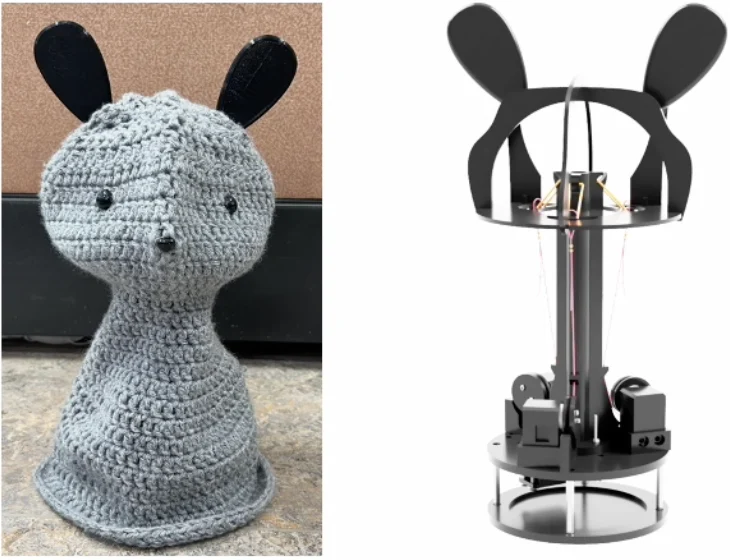
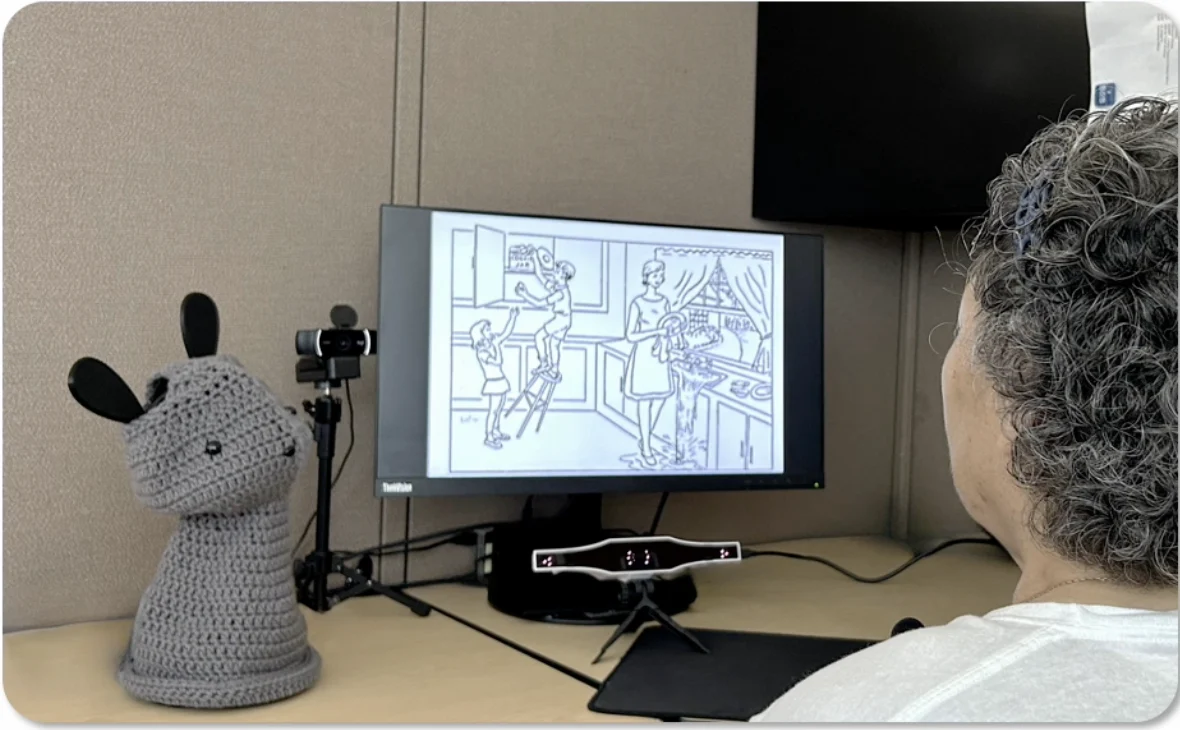
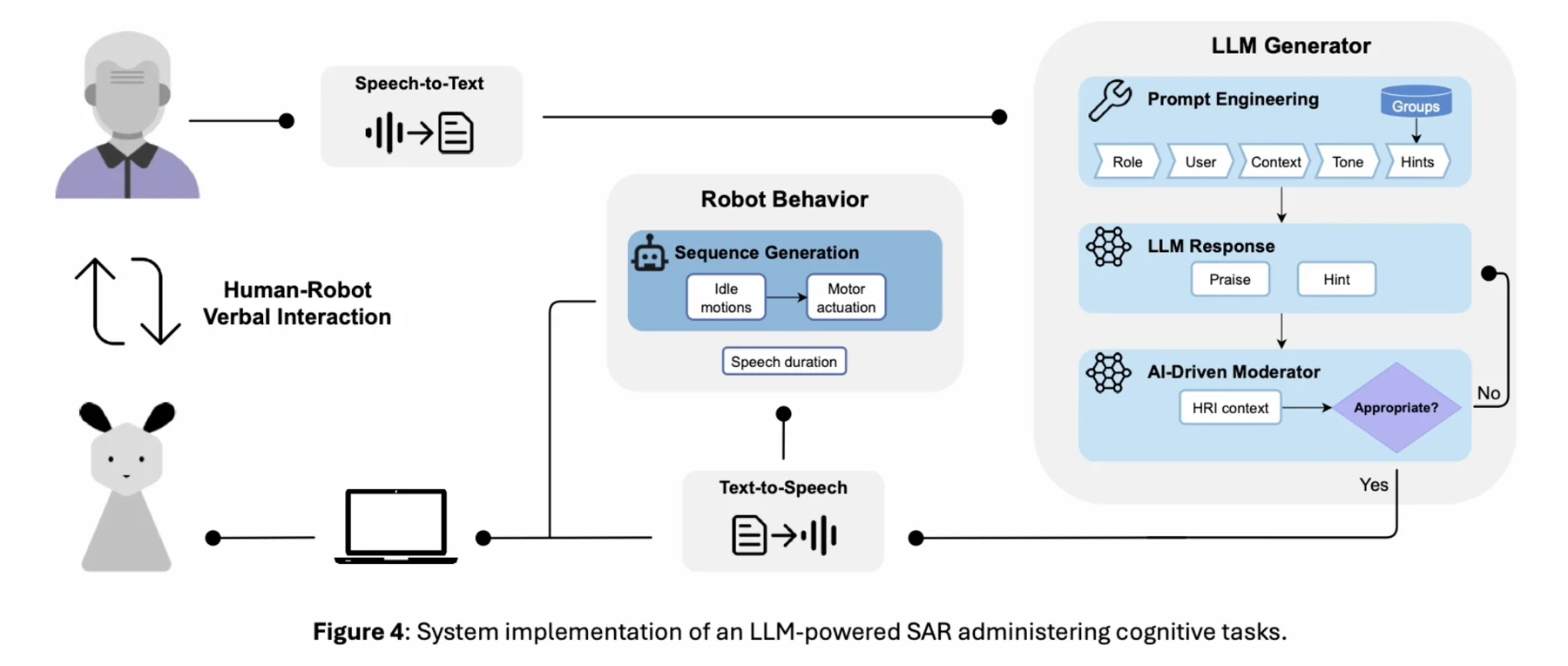
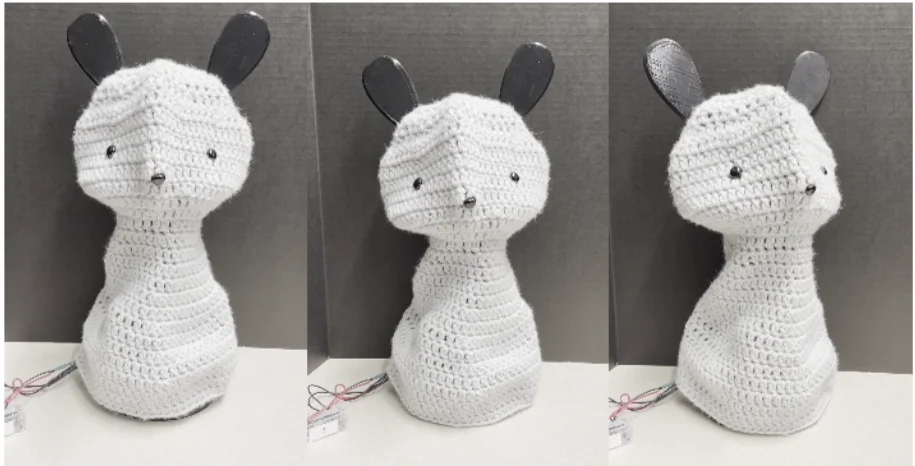
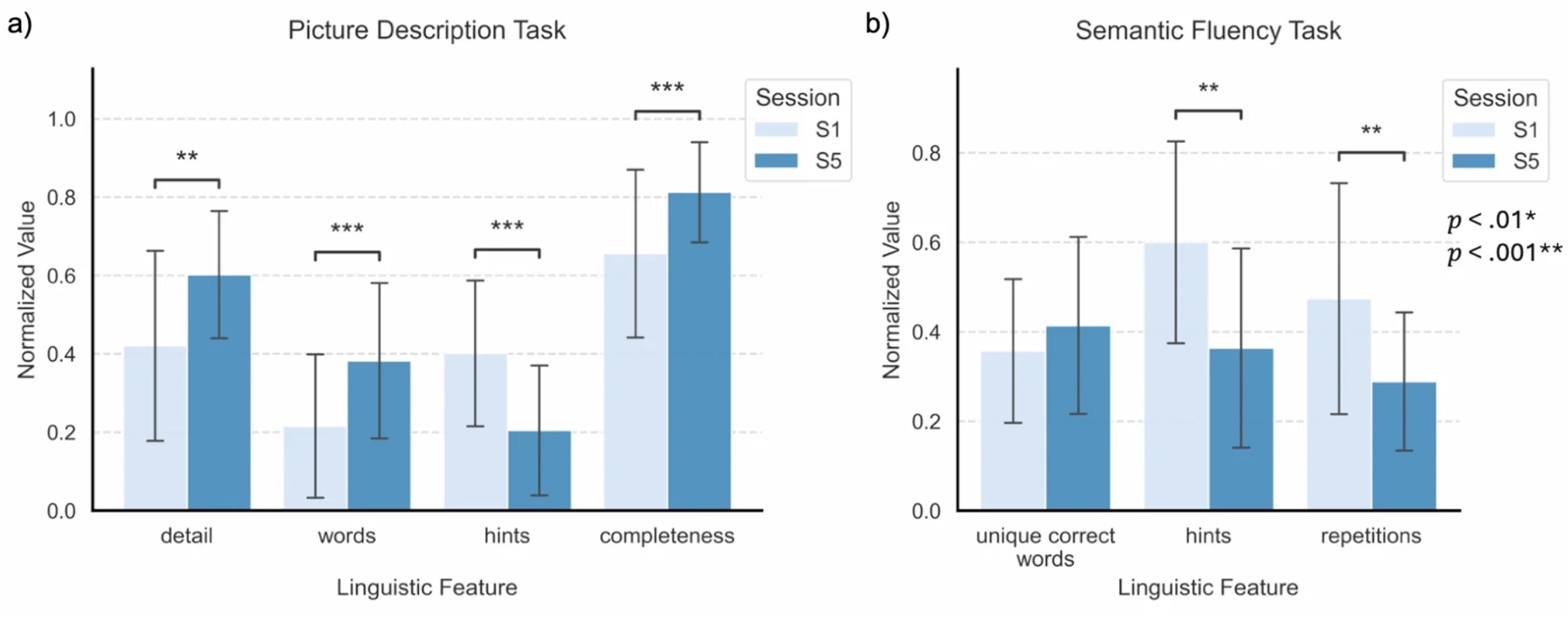
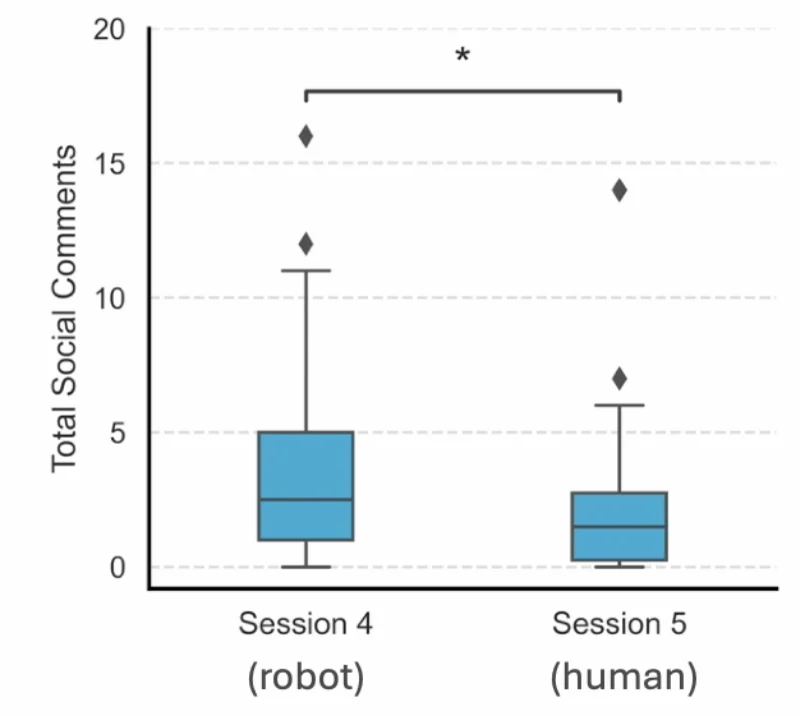
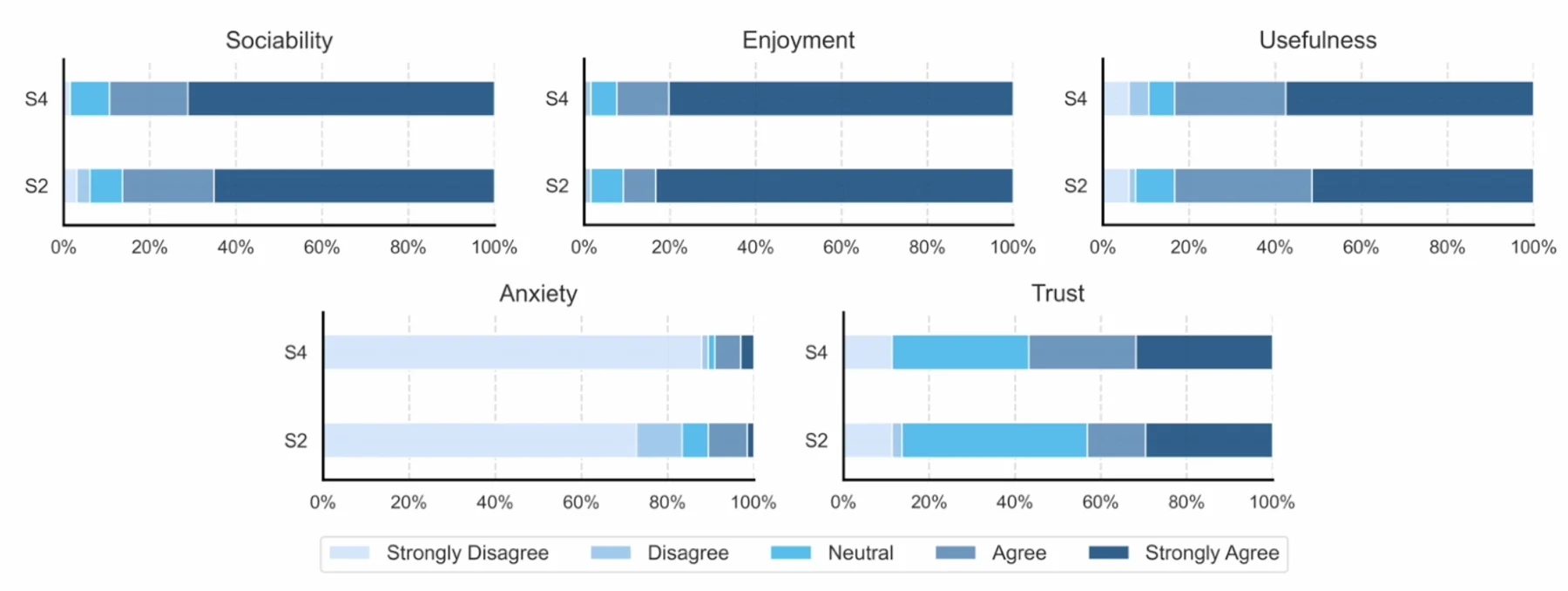
Can a low-cost social robot promote cognitive health where older adults actually live? We built an LLM-powered system on Blossom, an affordable, home-assemblable robot with a knitted skin, and ran a five-week within-subjects field study with 22 adults aged 65 and over in retirement homes, in English and Spanish. The robot administered two clinically validated verbal tasks (picture description and semantic fluency); a human administered the baseline sessions. After the robot-run weeks, task performance improved, participants made more spontaneous social comments with the robot than with the human, and acceptance stayed high after the novelty wore off.
7 figures
Collaboration: Imperial College London · UK Dementia Research Institute · University of Southern California.
Show BibTeX
@inproceedings{lima2025promoting,
  title     = {Promoting Cognitive Health in Elder Care with Large Language Model-Powered Socially Assistive Robots},
  author    = {Maria R. Lima and Amy O'Connell and Feiyang Zhou and Alethea Nagahara and Avni Hulyalkar and Anura Deshpande and Jesse Thomason and Ravi Vaidyanathan and Maja J. Matarić},
  booktitle = {Proceedings of the 2025 CHI Conference on Human Factors in Computing Systems},
  year      = {2025},
  address   = {Yokohama, Japan},
  doi       = {10.1145/3706598.3713582},
  url       = {https://doi.org/10.1145/3706598.3713582},
}